Accept-Triggered Follow-Ups
LinkedIn Follow-Up Automation That Starts on Acceptance
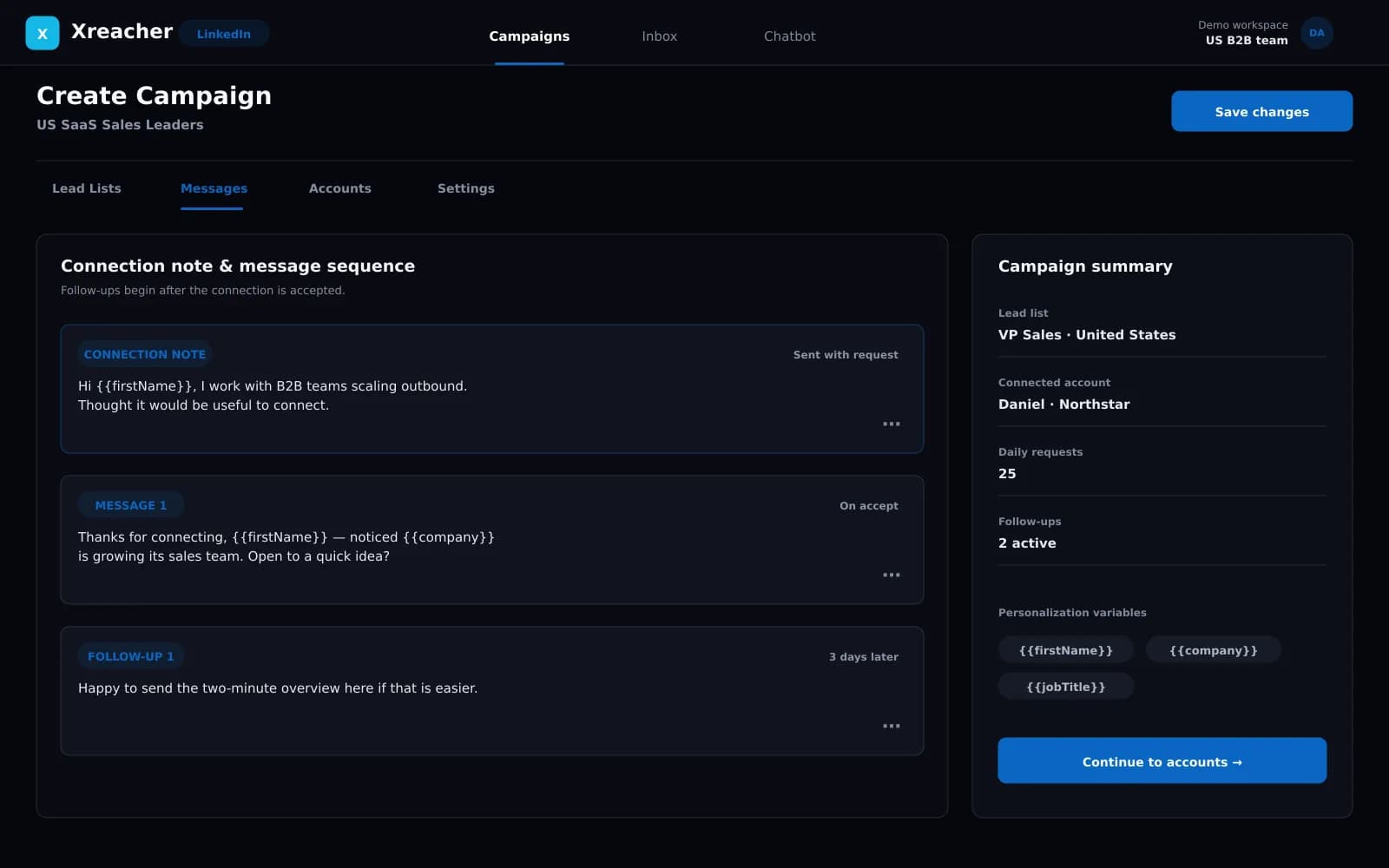
LinkedIn follow-up automation in Xreacher starts the campaign message sequence after a prospect accepts the connection request. The first message can send on acceptance, with additional follow-ups on configured delays. That removes manual reminder work while keeping the sequence tied to a real connection event rather than messaging people before they have accepted.
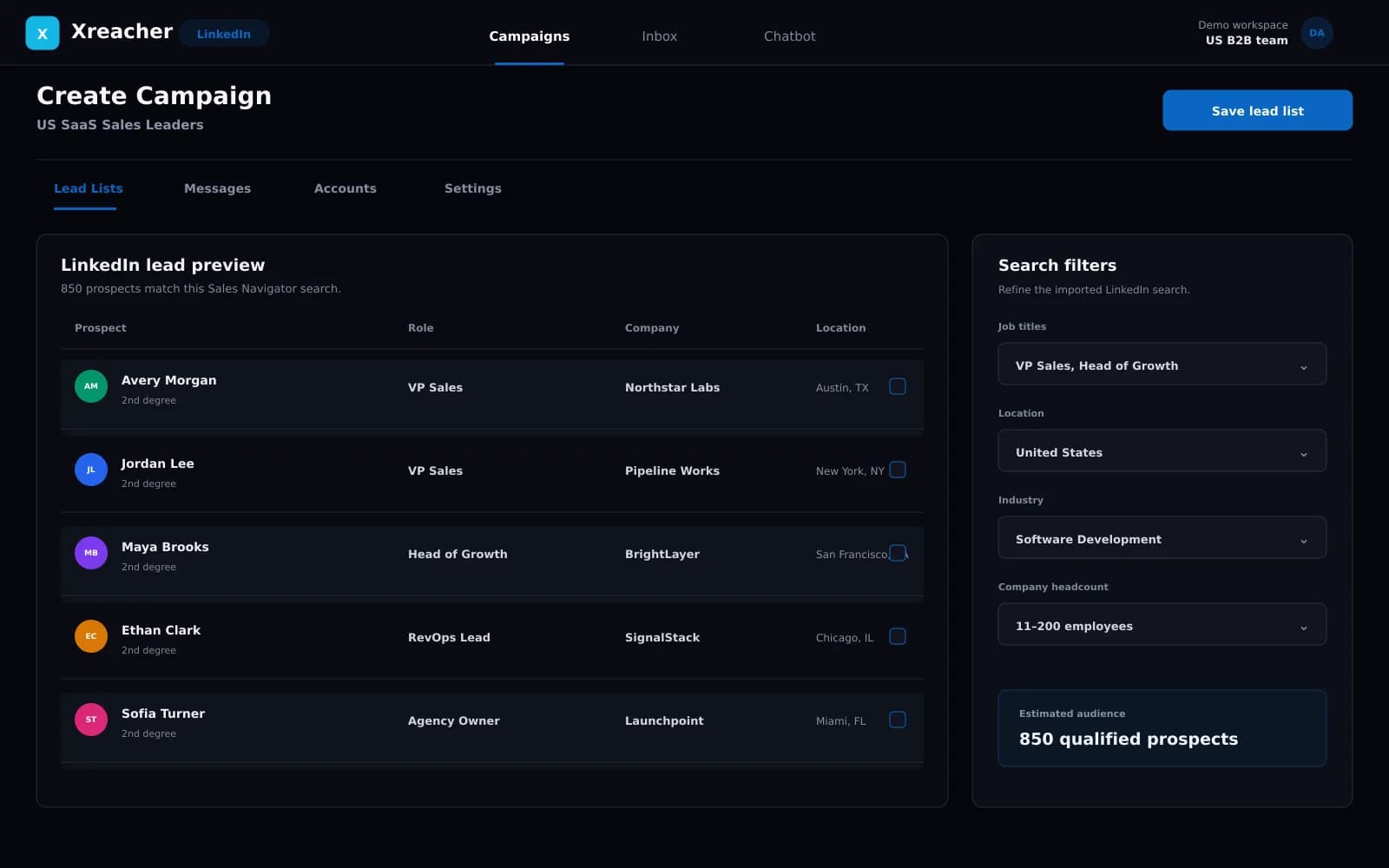
People-search lead lists
Turn LinkedIn people-search results into a campaign list, or import an existing list your team already approved.
Request-to-follow-up workflow
Send requests with an optional note, then trigger the first message and timed follow-ups after acceptance.
Campaign analytics
Review activity from the same LinkedIn campaign workflow.
Product proof
Screenshots from the actual outreach workflow
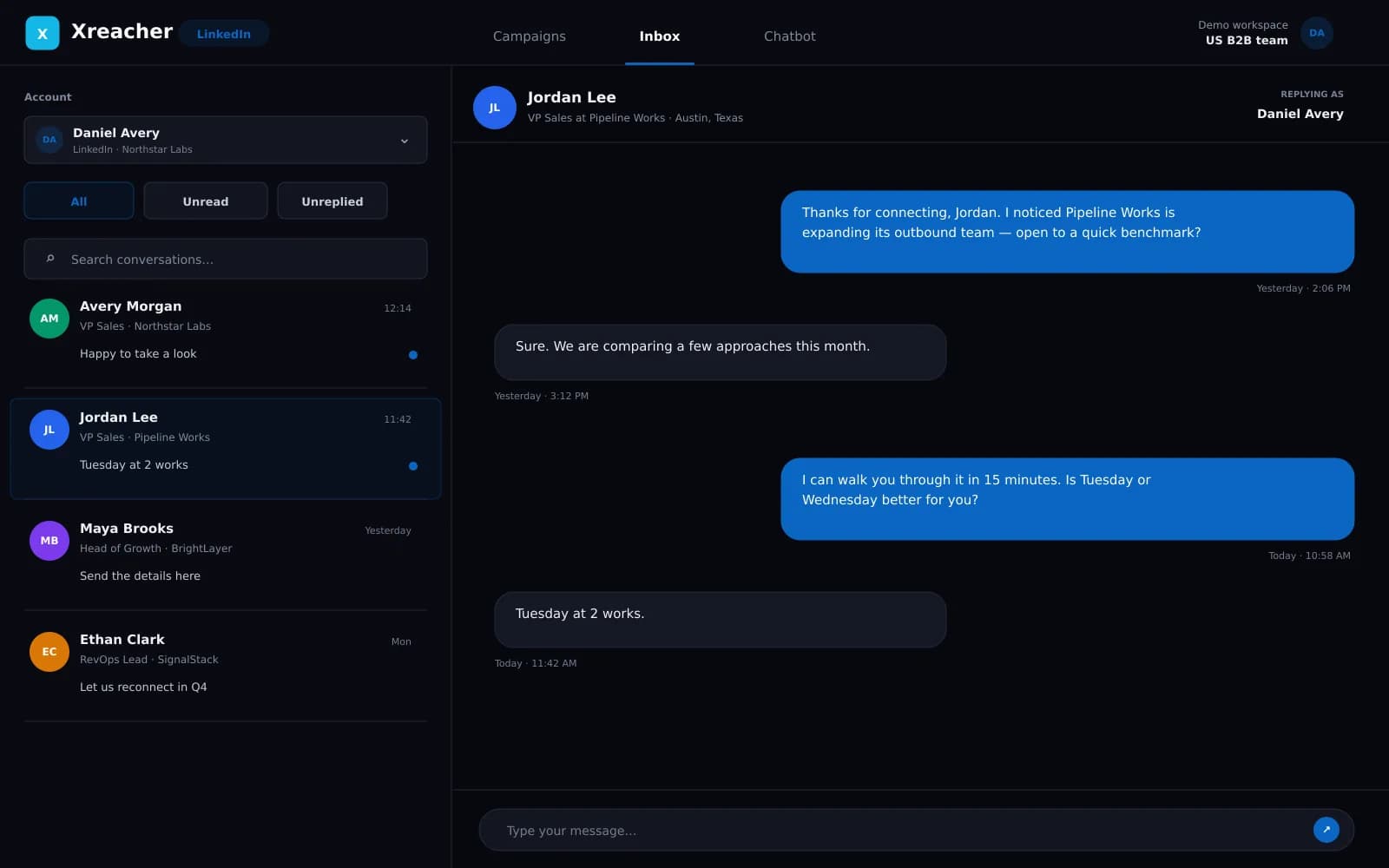
These fictional example workspaces reflect Xreacher's LinkedIn workflow: people-search lead lists, optional connection notes, accept-triggered messages, timed follow-ups, and campaign analytics.
Use acceptance as a clear automation trigger
Connection status creates a useful boundary for LinkedIn outreach. Before acceptance, the campaign is asking to connect. After acceptance, the prospect is eligible for the message sequence you configured. Xreacher uses that event to trigger the first campaign message, so reps do not have to scan new connections and copy templates manually. The trigger does not make the message relevant by itself; the sequence still needs to reflect the lead list, role, and reason the request was sent.
- Keep pre-accept activity limited to the connection request
- Trigger the first campaign message after acceptance
- Tie the message back to the original targeting context
Write one short sequence with deliberate delays
A useful sequence does not need many steps. Start with a clear first message that acknowledges the connection and introduces one relevant idea. Use follow-ups to add context, answer the most likely question, or make the next action easier — not to repeat the same pitch. Xreacher runs the additional messages on the delays configured in the campaign. Timing should leave room for the prospect to respond and should be reviewed against the connected account's overall activity.
- Open with one relevant reason for the conversation
- Use follow-ups to add information rather than repeat pressure
- Set measured delays between each campaign step
Keep the sequence specific without inventing familiarity
Write each campaign sequence for the audience segment it addresses. The copy should use accurate context and avoid implying a relationship that does not exist. For agencies, that means approving the positioning and wording before assigning the campaign to a connected account. For internal teams, it means matching the copy to the segment rather than forcing one generic sequence across every persona.
- Use accurate role and company context
- Approve templates before launching across an account
- Separate sequences when audiences have different problems
Review campaign activity and improve the next sequence
Automation is valuable when it creates a repeatable review loop. Xreacher campaign analytics show the activity associated with the campaign so the team can review its own audiences and messaging decisions without claiming a universal LinkedIn benchmark. Review the sequence after enough activity has accumulated and adjust the next campaign. The goal is not a self-running message machine; it is a consistent workflow that leaves the team more time for replies and qualification.
- Review campaign activity instead of relying on anecdotes
- Compare audiences and sequences within your own operation
- Use what you learn to revise the next campaign
FAQs
When does LinkedIn follow-up automation begin?
The first campaign message begins after the prospect accepts the connection request. Follow-ups then run on the delays configured in the sequence.
Can Xreacher message a prospect before they accept?
The LinkedIn campaign workflow described here uses acceptance as the trigger for its first message. Before that, the campaign sends the connection request and optional note.
How many LinkedIn follow-ups should a sequence use?
There is no universal number. Keep the sequence short enough that every step adds useful context, leave measured delays, and judge performance from your own campaign activity rather than a generic benchmark.
Can each campaign use a different follow-up sequence?
Yes. Configure the sequence for the campaign and audience it addresses. Keep the wording accurate, relevant to the segment, and consistent with the reason for connecting.
Does Xreacher guarantee replies from automated follow-ups?
No. Replies depend on targeting, offer, copy, account context, timing, and the prospect. Xreacher automates the configured workflow and provides campaign analytics; it does not guarantee outcomes.
Last updated 2026-08-07