Guide
Twitter Mass DM: How Agencies Send at Scale on X
A Twitter mass DM campaign sends one offer to a large list across many connected X accounts, each capped at X's own DM limit: about 7 DMs a day on a free account, 35 on Premium, and 75 on Premium+. It's a working channel for agencies whose offer fits a broad audience, like creator recruitment or mass-market promotions, but it trades reply rate for reach. Xreacher's benchmarks show senders on 1-3 accounts earning 2.2-2.5% replies, versus 0.39% for operations running 11 or more accounts. Xreacher runs mass DM campaigns from the cloud across as many connected accounts as you need, each with its own proxy, daily limit, and warmup schedule, with every reply landing in one Unibox.
Lead sourcing built in
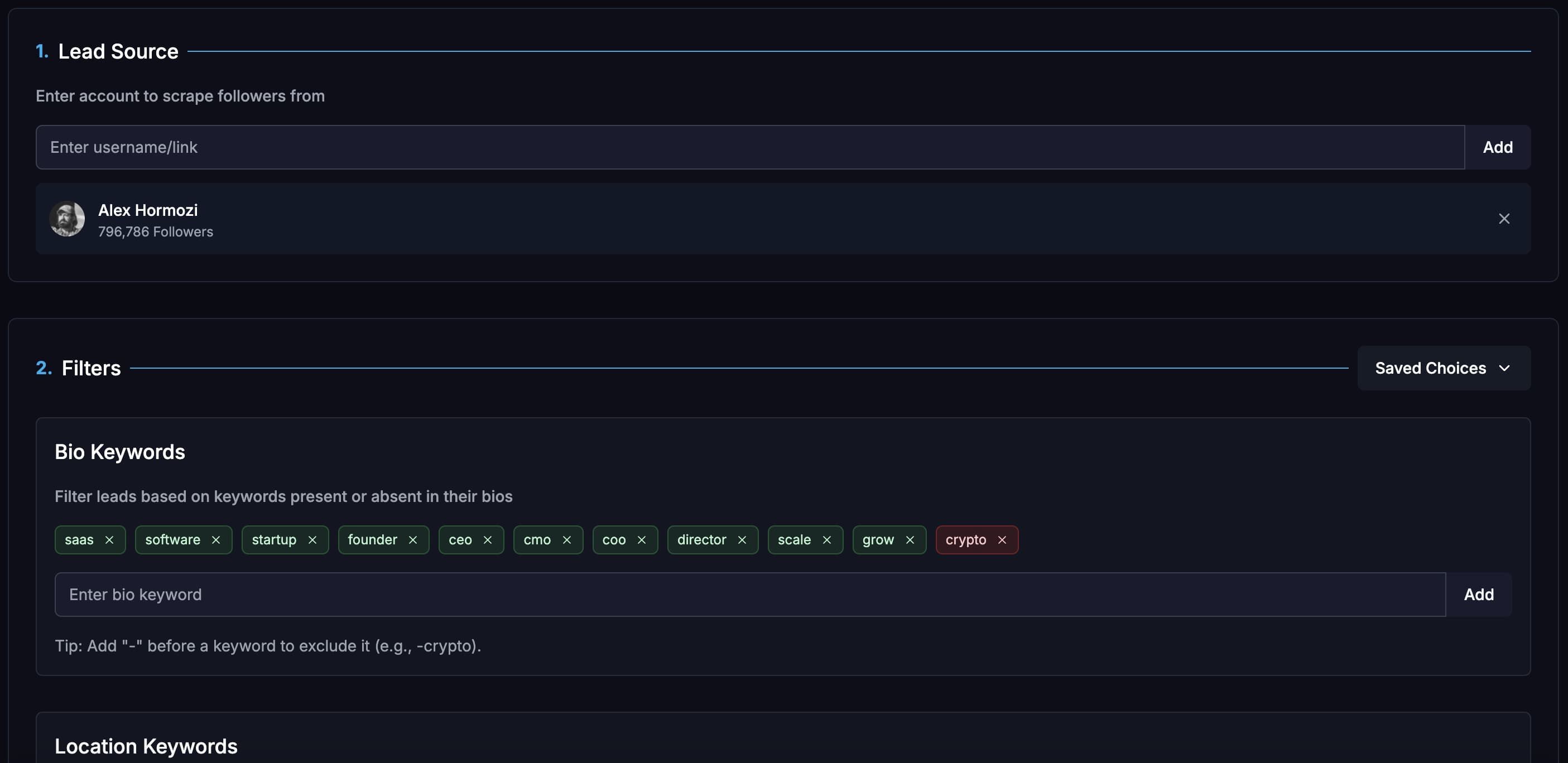
Build lists from X/Twitter audiences, keywords, imported lists, Telegram groups, and filtered prospect sources.
Campaign analytics
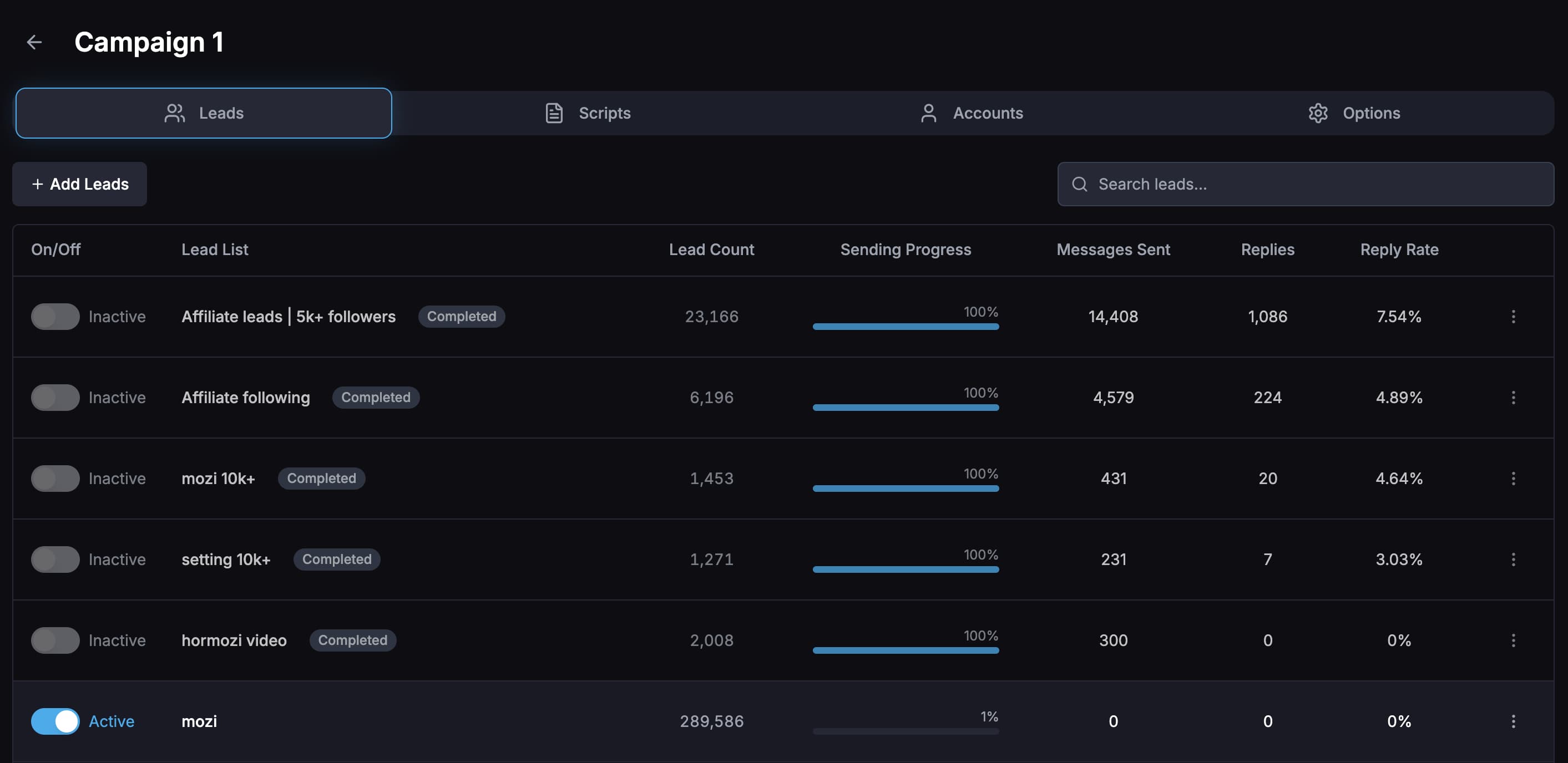
Compare reply rates by campaign, opener, message variation, sending account, and lead list so tests are not guesswork.
Unibox plus AI replies
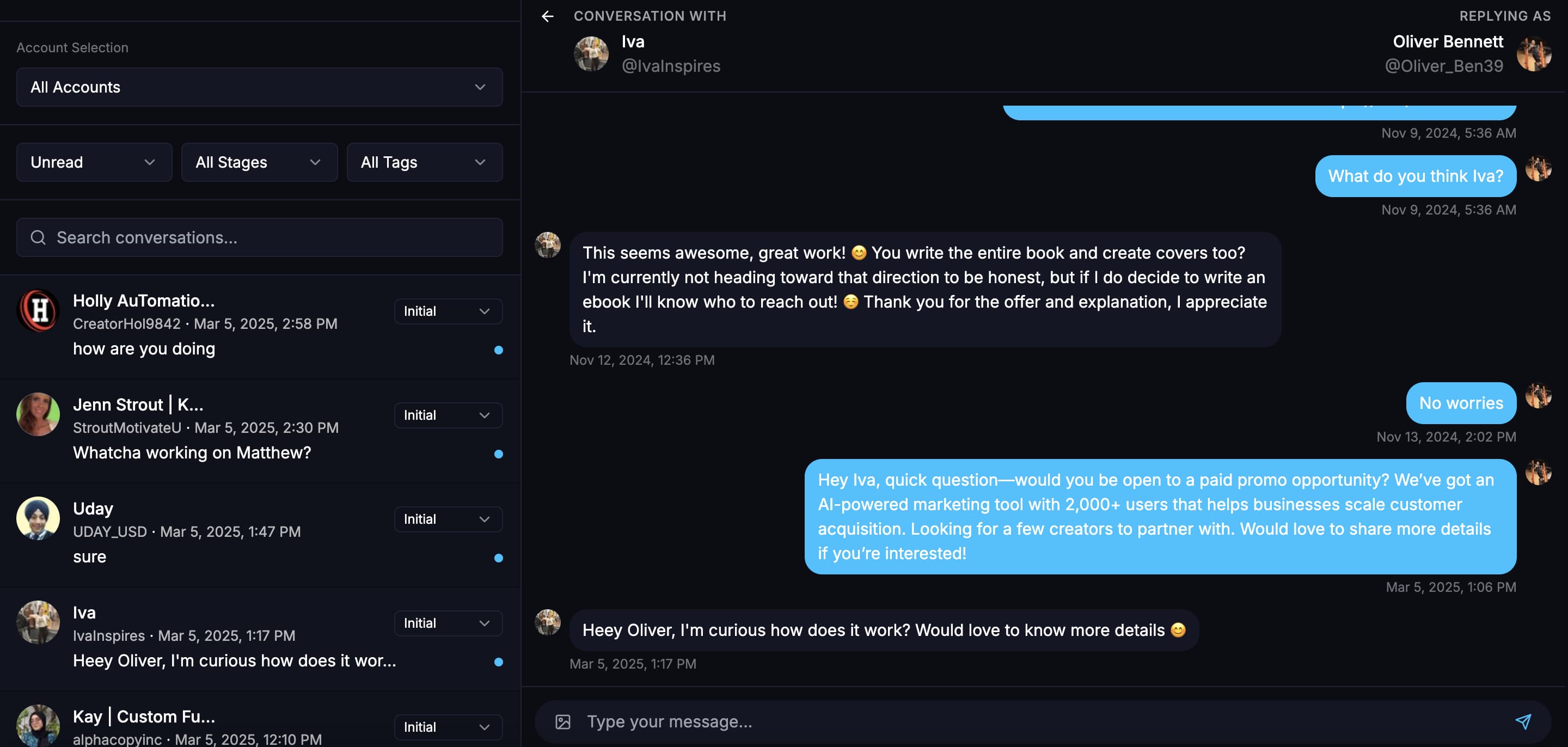
Read, filter, mark, and reply to leads from one inbox, or use an AI chatbot to handle goal-based conversations.
By the numbers
What 43.7M real cold DMs say
Figures below come from the Xreacher Cold DM Benchmarks (H2 2026), computed across every X/Twitter campaign sent through Xreacher in the 180 days ending July 3, 2026, aggregated, anonymized, with the methodology published on that page.
0.39%
Mass multi-account operations (11+ accounts)
Operations on 11+ accounts generated 97.5% of all DM volume but earned only a 0.39% reply rate, about 6x below small targeted senders.
See the data2.2-2.5%
Solo and small senders (1-3 accounts)
Senders using 1-3 X accounts saw 2.2-2.5% reply rates, roughly 6x the 0.39% earned by mass multi-account operations. Targeting beats volume.
See the dataProduct proof
Screenshots from the actual outreach workflow
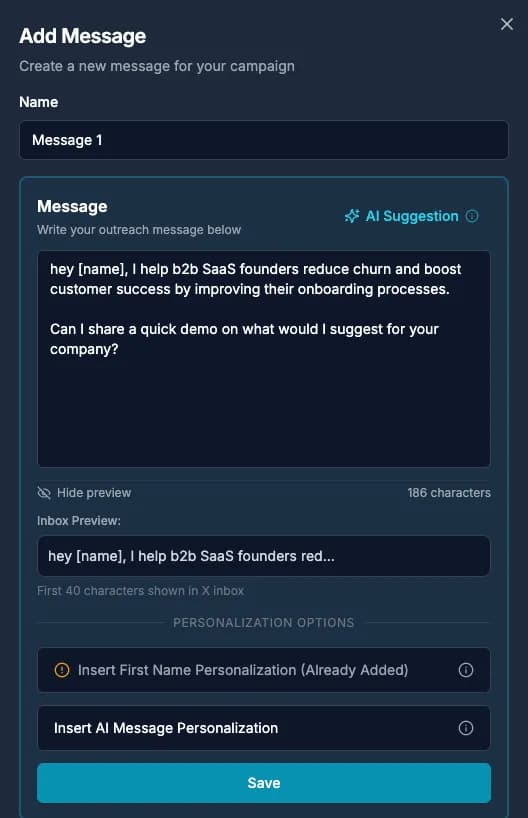
These pages are built around product workflows Xreacher already shows publicly: lead sourcing, AI-assisted messages, campaign analytics, inbox monitoring, and Telegram outreach.
What a Twitter mass DM campaign actually is in 2026
A mass DM campaign sends one offer to a large list across many connected X accounts, with each account carrying a slice of the volume. It fits agencies whose offer works for a broad audience: creator recruitment, mass-market promotions, or a funnel that filters itself once someone clicks through. It fits poorly when every recipient needs a personal, researched message, since that's a different job with different numbers. X caps how much any single account can send: about 7 DMs a day on a free account, 35 on Premium, and 75 on Premium+. Reaching real volume means running that math across several accounts at once, not pushing one account past its limit.
- Free accounts: about 7 DMs/day
- Premium accounts: about 35 DMs/day
- Premium+ accounts: about 75 DMs/day
- Fits broad-audience offers, not one-to-one research
The volume vs. reply-rate trade-off, from Xreacher's benchmarks
Xreacher's own cold DM benchmarks show the trade-off plainly: senders running 1-3 accounts earned a 2.2-2.5% reply rate, while operations running 11 or more accounts earned 0.39%, roughly 6x lower, even though those larger operations generated 97.5% of all DM volume in the dataset. Neither number is a verdict. Scale buys reach: more accounts sending inside their own daily limit means more total conversations started. Concentration buys reply rate: a smaller, closely run operation gets more responses per message sent. Which one matters more depends on whether the campaign needs total reach or a high response rate on a smaller list, and plenty of agencies run both at once, a mass layer for reach and a targeted layer for the leads worth chasing individually.
- 1-3 accounts: 2.2-2.5% reply rate
- 11+ accounts: 0.39% reply rate, but 97.5% of volume
- Scale buys reach; concentration buys reply rate
- Correlational data, not a promise for any one campaign
What our customer data shows about who you message
Inside Xreacher's own customer base, the most common way agencies build mass DM lists is scraping the followers of other, similar accounts. That's 94% of all volume, and it earns a 0.84% reply rate, below the 1.21% customer average. Messaging people who engaged with someone else's relevant post instead, meaning they liked, commented on, or reposted it, earns 5.0%, about 4x the average, on far less volume. The list source matters more than the account count. A mass campaign built on engager lists instead of raw follower scrapes should out-earn the same volume built on follower lists, even before you touch message copy. Source: Xreacher customer data, 2.1M X DM threads from 360 users, March to September 2026; correlational.
- Followers of other accounts (94% of volume): 0.84%
- Engagers of a relevant post: 5.0%, about 4x average
- Customer average across all sources: 1.21%
The account infrastructure mass sending needs
Volume is an operations problem before it's a messaging problem. Every connected account gets its own proxy, so its network identity stays stable instead of shared across accounts. Warmup tracking ramps a new account gradually instead of dropping it into full volume on day one. Each account's daily limit is set against X's own current caps for that account's tier, and Xreacher enforces it rather than leaving pacing to memory. Accounts move through real states, including rate-limited and a resting cooldown, so one flagged account doesn't take the rest of the list down with it. Campaigns coordinate across as many connected accounts as the plan covers, spreading the send instead of concentrating it on one profile.
- One proxy per account
- Warmup tracking before full volume
- Per-account daily limits set inside X's caps
- Rate-limited and resting states, not one shared risk
List quality, spintax openers, and paced follow-ups
Scale doesn't have to mean identical messages. Build the list from followers, following, tweet engagers, or a CSV, then filter it down by bio keywords, location, follower range, verified status, has-website, and gender before a single DM goes out. Write several message scripts and let AI openers and spintax vary the wording per lead, so a thousand sends don't read as one copy-pasted line across a thousand inboxes. Automated follow-up sequences chase non-repliers on a delay instead of a single message and silence, and suppression plus a blocklist keep the list from re-hitting anyone already contacted or opted out. None of this changes the account math from the caps above; it changes whether the volume you send actually reads as a message from a person.
- Scrape and filter before sending: bio, location, follower range, verified, has-website
- Multiple scripts, AI openers, and spintax variation
- Automated follow-up sequences on a delay
- Suppression and blocklist across the whole list
One Unibox for every account, and when targeted beats volume
Every reply from every connected account lands in one Unibox, so managing 20 accounts' worth of replies doesn't mean 20 open tabs. An AI reply agent can pick up the first response toward a goal like booking a call, with a configurable persona and built-in objection handling, while you take over any thread yourself. But mass sending isn't the right call for every campaign. When the list is small and each recipient is worth real research, like a handful of high-value creators or accounts you're personally courting, a targeted campaign on 1-3 accounts earns a meaningfully higher reply rate per message than spreading the same message across many accounts and a much larger list. Most agencies end up running both.
- Unibox: every account's replies in one inbox
- AI reply agent with persona and objection handling
- Targeted campaigns fit small, high-value lists
- Mass and targeted outreach usually run side by side
FAQs
Do Twitter mass DMs still work in 2026?
For agencies whose offer fits a broad audience, yes, with a clear trade-off. Xreacher's benchmarks show operations running 11 or more accounts earned a 0.39% reply rate while generating 97.5% of all DM volume, versus 2.2-2.5% for senders on 1-3 accounts. Mass sending buys reach, not the highest reply rate per message. Many agencies run both a mass layer and a targeted layer.
How do I mass DM on Twitter/X?
Connect several X accounts, each with its own proxy and a daily limit set inside X's caps (about 7, 35, or 75 DMs a day depending on tier). Build a list from followers, engagers, or a CSV, filter it, write a few message scripts with AI openers and spintax variation, then launch a campaign with follow-ups and let replies land in one Unibox.
What's the best mass DM tool for X?
Xreacher runs mass DM campaigns from the cloud across as many connected accounts as your plan covers, with a proxy and daily limit per account, warmup tracking, AI openers, automated follow-ups, and a shared Unibox for replies. Pro starts at $67/month for one account, with a 7-day free trial (card required); the Scale plan prices per account for larger operations.
How many DMs can I send per account per day on X?
It depends on the account's tier. Under X's current limits, free accounts can send around 7 DMs a day, Premium accounts around 35, and Premium+ around 75. Xreacher sets each connected account's daily limit inside whatever cap applies to it and enforces it automatically, so pacing doesn't depend on remembering the number.
Is mass DMing better than targeted outreach on X?
Neither wins outright; they solve different problems. Xreacher's benchmarks show 1-3 account senders earning 2.2-2.5% reply rates versus 0.39% for 11-plus-account operations that generate most of the volume. Mass DMs fit a broad-audience offer that needs reach. Targeted outreach fits a small list where each reply is worth real research. Many agencies run both.
Will mass DMing get my X account restricted?
The usual precedents are sending beyond the account's cap, near-identical messages in bursts, brand-new accounts pushed to full volume immediately, and several accounts sharing one network identity. Xreacher's per-account proxies, warmup tracking, enforced daily limits, and spintax-varied openers address exactly those patterns, though no tool can promise how X treats any individual account.
Last updated 2026-09-24